 Description:
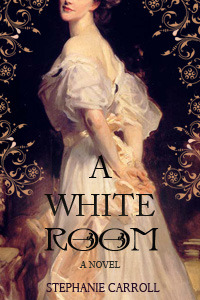
At the close of the Victorian Era, society still expected middle-class women to be “the angels of the house,” even as a select few strived to become something more. In this time of change, Emeline Evans dreamed of becoming a nurse. But when her father dies unexpectedly, Emeline sacrifices her ambitions and rescues her family from destitution by marrying John Dorr, a reserved lawyer who can provide for her family.
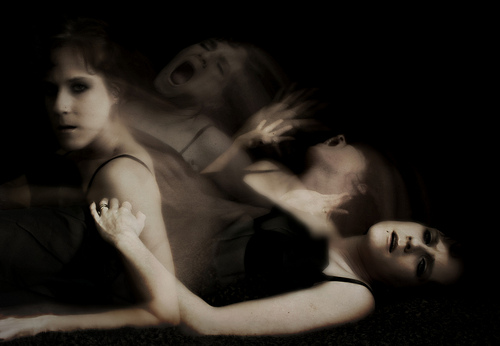
John moves Emeline to the remote Missouri town of Labellum and into an unusual house where her sorrow and uneasiness edge toward madness. Furniture twists and turns before her eyes, people stare out at her from empty rooms, and the house itself conspires against her. The doctor diagnoses hysteria, but the treatment merely reinforces the house’s grip on her mind.
Emeline only finds solace after pursuing an opportunity to serve the poor as an unlicensed nurse. Yet in order to bring comfort to the needy she must secretly defy her husband, whose employer viciously hunts down and prosecutes unlicensed practitioners. Although women are no longer burned at the stake in 1900, disobedience is a symptom of psychological defect, and hysterical women must be controlled.
A novel of madness and secrets, A White Room presents a fantastical glimpse into the forgotten cult of domesticity, where one’s own home could become a prison and a woman has to be willing to risk everything to be free.
An Insane Woman Battles Furniture in Stephanie Carroll’s A White Room
Author Stephanie Carroll will be checking Lost to Books periodically for the first week of this post to answer any questions readers may have so post away in the comments!
I hadn’t opened the doors, in case John returned quickly. If he’d been home, he would have left open the door to whichever room he was in. None were ajar.
“Jo—hn?” It felt like hollering underwater. I cleared my throat and took a breath. I was preparing to raise my voice when pounding on the second floor stopped me. I turned my eyes up and listened, too frightened to move. Was it John? Was it the beast?
A clanking noise came from the parlor. I saw the glow of the lamp on the doorknob, hesitated, heard clacking, and inched over.
I grasped the knob, twisted it, and pushed the door open.
It opened to reveal that all the furniture in the parlor was moving,dancing. The winding appendages of the bizarre tables and chairs were actually twisting and twirling. The legs were flailing, and the statues and pictures were sashaying. I dropped the lamp, and the glass cylinder shattered on the floor. My disturbance did not halt the wooden beings’ frenzy. I thrust my hands out. “Stop!Stop! You must stop!” The furniture continued to dance as if I didn’t exist. I looked around at the chaos and tried to think of the appropriate action. I needed to stop this. John could return at any moment. “Stop!” I screamed as loud as I could to cut through the clanking and flailing. “Stop! Stop! Stop now!”
They refused to respond, and an unbearable sense of urgency rose within me from deep in my abdomen. I screamed and grabbed at the snaking extremities. I took hold of the leg of a chair and snapped it off. With the sound of the chair’s limb breaking free, an unquenchable need to demolish these rebellious objects began to boil in my gut. I bunched my hands into tight little rocks and experienced my own detonation. I picked up a statuette and hurled it at the wall. I kicked over a table, and all the bric-a-brac crashed to the floor. I stomped down on the legs of the table I’d knocked over, breaking all but one off. I continued seeking out the most frail furnishings and tearing them limb from limb. The entire room fell into a hush. I seized a detached extremity and waved it in the air. “Do you see? Do you see what I can do to you?”
The room sat motionless, as if nothing had happened. Had it not? I scanned the parlor and saw the disarray that had resulted from my thrashing. My heart skipped. John would be home soon.
I couldn’t allow him to see it. What would he think? What a cruel and evil trick the furniture had played on me. Quickly, I ran about the room and turned chairs and tables upright and gathered the smashed pieces of bric-a-brac together. I scuttled and tripped on my skirt. I swiftly removed the broken table, dismembered pieces, and shattered porcelain and ran down the stairs to stow them with my melancholy in the basement.
As I set the rubble down in a corner, I heard thumping again.
I dashed upstairs and into the parlor to find the furniture at it again, only this time instead of merely dancing, the pieces were running amok. The bastards knew I would be the one to suffer the consequences. They didn’t speak it—they couldn’t, being only furniture—but I knew they were calling out in an uproar, “Do you see? Do you see what we can do to you?”
I watched as one reached out and tipped over a potted plant, scattering soil everywhere.
“No!”
A twirling vine from a cabinet slid up the wall, lifted off a mirror and let it crash to the floor.
“You wretched things!” I scrambled to pick everything up. I moved from place to place standing tables up, positioning chairs to face the proper direction, and gathering shards of porcelain and glass. I picked up trinkets and statuettes and put them in their places. Every time I cleared something from the room, I returned to worse. Every time I put something right, I whirled around to find it all wrong again. “No, no, no.”
Finally, I couldn’t take anymore. I fell to my knees, covered my face with my hands and screamed. “Stop! Stop! I’m begging you—please stop!”
“Emeline?” A calm but curious voice broke through the insanity.
Nothing around me was in motion. There was only me, a lifeless parlor, and John’s voice. I opened my eyes, lifted my head and peeked through my hands to see his lanky form standing in the open doorway, his cheeks twitching and his eyes bulging. “What happened?” He sounded oddly concerned.
I looked up, stunned. I lowered my trembling hands from my face and clasped them at my chest. My mouth hung open but could not form syllables.
He stared.
“I—I tripped?”
“You tripped?”
I nodded ever so slightly.
He pointed. “You have blood on your face.”
I lifted my hand to my left cheek and felt a wet slick but no pain.
I noticed a slit in my sleeve that revealed a little blood-speckled
flesh. “Uh—I—I cut myself.”
John observed the room—furniture tipped over, chairs facing every direction, dirt strewn across the floor, little piles of broken porcelain and glass throughout. He may have suspected my dishonesty.
He bent down and picked up a rounded fragment of a vase.
My eyes darted to and fro in panic. I realized how I must have looked, on my knees in the middle of the room, panting, with a red smear across my face, a cut arm, surrounded by wreckage. “It was an accident.”
He rubbed the broken porcelain with his thumb. “Well, I’ll be in the library.” He turned and walked out.
I looked over my shoulder at the destroyed parlor, everything limp and lifeless. “Damn furniture.”
—Quoted with the permission of the author.
A White Room is Available
in Print $14.99 and
eBook $3.99 (Kindle, Nook,
Sony, e-pub)
Amazon
- Barnes &
Noble - Sony
- Kobo
- Inktera
- Smashwords
- Apple’s
iBooks
 About the Author
As a reporter
and community editor, Stephanie Carroll earned first place awards from the
National Newspaper Association and from the Nevada Press Association. Stephanie
holds degrees in history and social science. She graduated summa cum laude
from California State University, Fresno.
Her dark and
magical writing is inspired by the classic authors Charlotte Perkins Gilman (The Yellow Wallpaper), Frances Hodgson
Burnett (The Secret Garden), and
Emily Bronte (Wuthering Heights).
Stephanie blogs and writes fiction in
California, where her husband is stationed with the U.S. Navy. Her website is www.stephaniecarroll.net.
A White Room is her debut
novel.
Find Stephanie Carroll
Follow the Blog Tour!
Weds, June 19 – Oh, For the Hook of a Book:
Book Review and Giveaway (ebook)
Thurs, June 20 – Hazel the Witch:
Interview and Giveaway (Print)
Sat, June 22 – Reading in Ecuador:
Guest Post: How to Write
Suspenseful Fiction including A White
Room excerpt
Thurs, June 27 – Momma Bears Book Blog: Giveaway
and
Guest Post: The Story Behind
Emeline’s Mental Distress
Fri, June 28 – The Bookish Dame: Interview
and Giveaway
Tues, July 2 – I
am Indeed: Guest Post: Historical Accuracy in
Historical Fiction
Mon, July 8 – Bookfari: Interview
and Giveaway
Tues, July 9 – Hazel the Witch:
Guest Post – How to Write the
Inner Thoughts of a Crazy Person
Weds, July 10 – Satisfaction for
Insatiable Readers: Review and Giveaway
Fri, July 12 – Lost to Books:
Guest Post TBA and Giveaway
Mon, July 15 – A Writer of History:
Guest Post: Writing an Era – Where to Begin?
Weds, July 17 – Michelle’s Romantic Tangle:
Interview
Thurs, July 18 – Oh, For the Hook of a Book: Interview
Tues, July 23 – Unabridged Chick: Review
and Giveaway
Thurs July 25 – Ravings and Ramblings:
Review and Interview
Tues July 30 – Reading the Past: Giveaway
and Guest Post:
Writing and Historical
Thought - They Didn't Think Like We Did 100 Years Ago
Sat, Aug. 3 – History and Women:
Giveaway and Guest Post:
Guest Post: Victorian Women and the Mystery of
Sex